AI-assisted refactoring playbook 2026
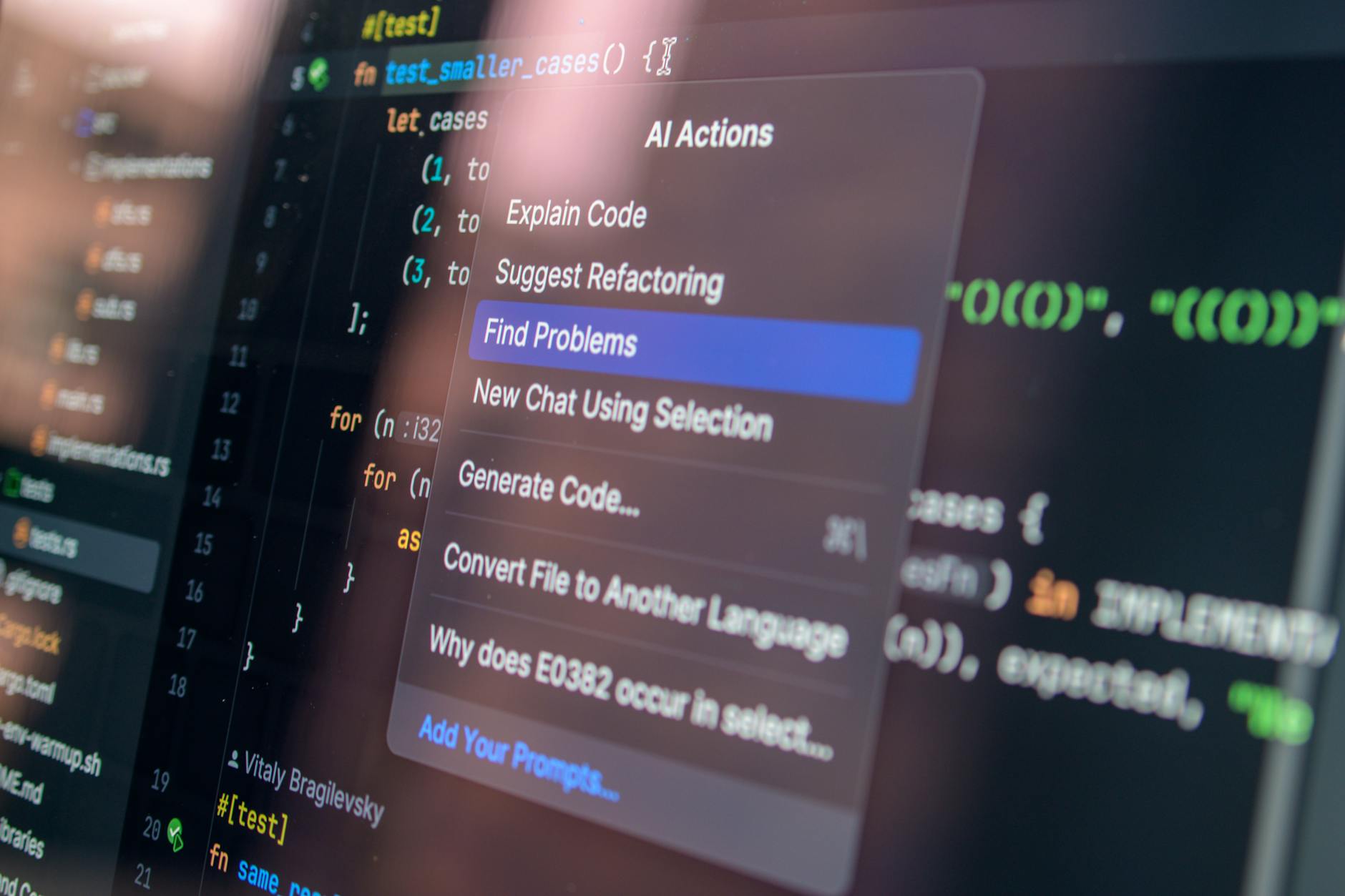
AI-assisted refactoring playbook 2026
An AI refactoring playbook in 2026 looks like this. Write the scope in plain text first (a 3-line before/after plus the tests that must still pass). Let an AI agent (Claude Code, Aider, Cursor Agent, Codex CLI) propose the change in a feature branch. Force the agent to run tests after every file edit. Then review for architectural intent, not syntax. Small refactors merged daily beat one big-bang PR every time.
That is the entire playbook in one paragraph. The rest of this post is the why, the categories, the cost math, and the literal Steps sequence at the bottom you can copy into a runbook.
What changed between 2023 and 2026
In 2023, "AI refactoring" meant pasting a function into a chat window, pasting the result back, and praying the imports still resolved. The AI had no file system, no test runner, no diff control. You were the loop.
In 2026, the agent is the loop. Claude Code, Aider, Cursor Agent, and Codex CLI all read your repo, write to disk, run your test suite, parse the failures, and try again. The human typing has been replaced by the human reviewing.
Two things shifted that matter. First, context windows got long enough (200k to 1M tokens) that an agent can hold an entire mid-sized service in working memory. Second, tool use matured (the agent can bash your test suite, git diff its own changes, and grep for callers) so the proposal-test-iterate loop actually closes without you in it.
The bottleneck moved. It used to be typing speed. Now it is scope clarity and review judgement. An agent that does not know exactly what you want will refactor too much, drag in unrelated files, and hand you a 4,000-line diff that nobody can review. That is the failure mode this playbook prevents.
The six refactor categories that matter
Not all refactors are the same. They differ in agent strategy, token cost, and how heavily a human needs to review the output. The six categories below cover roughly 95% of what you will actually do in 2026.
| Refactor | Best agent | Token cost | Review depth |
|---|---|---|---|
| Rename across files | Claude Code or Cursor Agent | $1 to $3 | Light (linter and tests catch it) |
| Extract function | Aider or Cursor Agent | $2 to $5 | Medium (intent check) |
| Consolidate duplicates | Claude Code | $5 to $15 | Medium (test the merged path) |
| Modernize syntax | Codex CLI or Aider | $10 to $30 | Light (CI catches breakage) |
| Dependency upgrade | Claude Code | $20 to $100 | Heavy (runtime, not just compile) |
| Paradigm rewrite (callback to async, classes to hooks) | Claude Code with a planner step | $50 to $300 | Heavy (architecture interview with the agent) |
Notice the column headers. There is no "best tool overall." There is only the right tool for the refactor in front of you. Engineers who treat Cursor Agent as a hammer for every problem end up paying for screwdriver work.
The two cheapest categories (rename, extract function) should be running daily on every codebase. The two most expensive (dependency upgrade, paradigm rewrite) deserve a written design doc before you let the agent touch anything.
Scope the refactor in writing first
Before you open the agent, open a markdown file. Three sections:
## Before
const result = data.filter(x => x.active).map(x => x.id)

## After
const result = activeIds(data)

## Tests that must still pass
- `data.spec.ts > activeIds returns ids of active records`
- `data.spec.ts > activeIds skips inactive records`
- `api.spec.ts > GET /users returns active user ids only`
That is it. Three lines of before, three lines of after, the tests that pin the contract. Commit it as spec.md next to the code. This is the same prompt-as-spec discipline we cover in our prompt engineering for engineers write-up: the same artifact that briefs the human briefs the model.
Why this matters. Without a written scope, the agent will guess. It will reach for "while I am here, let me also..." patterns that make a 50-line refactor into a 500-line one. With a written scope, the agent's job is bounded. You can also re-run the same spec with a different agent and compare outputs.
The teams that skip this step are the ones who blame the agent for over-refactoring. The agent did exactly what an under-specified prompt asked it to do.
The agent loop: propose, run tests, iterate
The actual run looks like this. Open a feature branch. Point the agent at the spec. Tell it to run the test command after every file it touches, not at the end. Modern agents (Claude Code, Aider with --auto-test, Cursor Agent, Codex CLI) all support this natively in 2026.
Why test-after-every-edit and not test-at-the-end? Because if a 12-file refactor breaks on file 3, you want the agent to discover that on file 3 (when the change is small and the failure is local) instead of on file 12 (when the failures cascade and the agent does not know which edit caused which break). This is the same loop we describe in our LLM eval suite post for grading model outputs. Tests are evals for refactors.
A typical loop for a 100-file rename:
- Agent reads the spec and lists candidate files via
grep. - Agent edits file 1, runs
npm test, sees green, moves on. - Agent edits file 2, runs
npm test, sees a regression in an unrelated file, opens it, fixes the missed reference, re-runs. - Repeat until all files are green.
Token cost for this entire loop sits around $20 to $30 in API spend on Claude Sonnet pricing. Wall-clock time is 30 to 90 minutes depending on test suite speed. Human time is the 5 minutes spent writing the spec plus the 30 minutes reviewing the resulting PR.
Human review focuses on intent, not syntax
This is the biggest mindset shift. In a 2026 PR review of an AI-authored refactor, you are not checking whether the variable names are good (the linter and the agent already agreed on that). You are checking three things:
- Did we test the right thing? If coverage was thin going in, the agent could have changed behaviour and the tests would still pass. Look at what the tests actually assert.
- Did the architecture move in the direction we want? A consolidation refactor that pulls three files into one might be correct or might be premature abstraction. The agent cannot make that call.
- Is there silent breakage outside the test surface? Performance regressions, log volume changes, edge-case behaviour the tests do not cover.
The review is faster and deeper at the same time. Industry data shows roughly 60% fewer regressions on diffs under 200 lines and 40% faster review cycles when scope is tight. Our AI-assisted code review post goes deeper on running a CodeRabbit or Greptile pass on top of the human review, which catches another tranche of issues without slowing anyone down. The combined human-plus-bot review is where the speed gains compound.
If you cannot tell the difference between an AI-authored diff and a human-authored one in review, you have done it right. The refactor reads natural; the tests still pass; the architectural intent is clear from the commit message and the spec.md sitting next to the code.
The ratchet pattern beats the big-bang PR
A ratchet is a mechanism that only moves one direction. In refactoring, the ratchet pattern means: small refactors merged daily behind feature flags, never reverting, always compounding.
Every day, your codebase gets a little cleaner. One rename Monday. One extracted function Tuesday. One duplicate consolidated Wednesday. Each click is small enough to review in 10 minutes and reversible if it breaks something downstream. By Friday the codebase is meaningfully better and nobody had a heroic week.
The opposite is the big-bang refactor. A senior engineer disappears for two weeks, comes back with a 6,000-line PR titled "refactor v2 architecture," nobody reviews it properly because nobody can hold it in their head, it sits open while merge conflicts pile up, and three months later it gets abandoned. We have all watched this happen.
Atlassian's published Nav4 cleanup ran across 1,400 files but shipped as a sequence of package-level batches, not one PR. That is the ratchet, just at scale. The same pattern works for a five-person startup: scope it small, ship it daily, let the agent do the typing.
The ratchet only works if the agent loop is fast and the review loop is light. Both of those are now true in 2026 in a way they were not in 2023.
The cost math in 2026
This is the section every engineering leader asks about. Here is the actual math for a representative 100-file refactor (a typical "extract a service" or "modernize an API surface" job).
| Resource | AI agent path | Senior engineer path |
|---|---|---|
| API tokens | $20 to $30 (Claude Sonnet) | $0 |
| Wall-clock time (machine) | 4 to 6 hours | 0 |
| Wall-clock time (human) | 2 to 3 hours review | 40 to 80 hours |
| Loaded labor cost | $80 to $200 (review only) | $2,000 to $4,000 |
| Total | $100 to $230 | $2,000 to $4,000 |
The AI path is roughly 10x to 40x cheaper. That is not the interesting number. The interesting number is throughput: the same senior engineer who used to land one large refactor a month can now land twenty, because the typing is delegated and the review is fast.
A few caveats so this is honest. The AI path requires a senior engineer to write the spec and review the diff; you cannot do this with a junior who does not understand what good looks like. The AI path also assumes a working test suite; on a codebase with no tests, you spend the savings on writing characterization tests first (which is itself a great use case for an agent). And the largest paradigm-rewrite refactors still benefit from human design work upstream of any agent.
If you want to see how the math plays out across a full feature scope (not just a refactor), our writing code with AI post breaks down end-to-end build economics with the same lens.
What to do this week
Pick one refactor from the six categories above. Write a spec.md with the three sections (before, after, tests). Open a feature branch. Run the literal Steps sequence below in your agent of choice. Review the diff for intent. Merge. Do it again tomorrow.
If you do not have a senior engineer with the AI-native habits to drive this loop on your team, that is a hiring problem and a fixable one. Every engineer on Cadence is AI-native by default; the voice interview specifically scores Cursor / Claude Code / Copilot fluency, prompt-as-spec discipline, and verification habits before they unlock bookings. A mid-tier Cadence engineer at $1,000 per week can run this loop on your codebase from day one. A senior at $1,500 per week can design the spec for a paradigm-rewrite refactor without supervision. Decide your next refactor with the Build/Buy/Book recommender if you want a quick gut-check on whether to run this in-house or book external help.
Steps
- Scope the refactor. Write
spec.mdwith three sections: before (3 lines of current code), after (3 lines of target code), tests that must still pass. Commit it next to the code. - Write the eval tests. If the test coverage on the affected surface is thin, write characterization tests first. The tests are the contract the agent has to satisfy. No tests, no agent.
- AI pass 1. Open a feature branch. Point Claude Code, Aider, Cursor Agent, or Codex CLI at the spec. Configure it to run the test command after every file edit and to stop and report on any failure it cannot resolve in two attempts.
- Human review. Open the diff. Check three things in order: did the tests change in unexpected ways, did the architecture move in the direction the spec described, is there any behaviour change outside the test surface (performance, logs, side effects).
- Ship. Merge behind a feature flag if the change is risky, behind nothing if it is a pure refactor with green tests. Move to the next refactor tomorrow. Ratchet, do not big-bang.
If you want this loop running on your codebase next week without rebuilding the team's habits from scratch, book a vetted Cadence engineer for a 48-hour free trial. Every engineer on the platform is vetted on Cursor, Claude Code, and Copilot fluency before they unlock bookings, so the playbook above is how they already work.
FAQ
Can AI refactor a whole codebase in one shot?
Technically yes, practically no. Big-bang refactors create unreviewable diffs, hide regressions inside the noise, and stall on merge conflicts. The 2026 playbook is to ratchet: small scoped refactors merged daily, each one reviewable in 10 minutes, compounding into meaningful architectural change over weeks.
Which AI agent should I pick for refactoring in 2026?
Claude Code for cross-file architectural moves and dependency upgrades where context depth matters. Aider for surgical edits with tight diff control and a strong CLI workflow. Cursor Agent when you want the refactor to flow with your in-editor work. Codex CLI for headless CI-driven sweeps. Most senior engineers use two or three of these depending on the job, not just one.
Do I still need tests if the AI writes the refactor?
More than ever. Tests are the contract the agent has to satisfy and the signal that the refactor preserved behaviour. Without tests, a passing AI refactor tells you nothing about correctness. If your test coverage on the affected surface is thin, write characterization tests first; agents are good at this and it pays for itself on the first refactor.
What does an AI-assisted refactor actually cost in 2026?
Roughly $20 to $30 of API tokens plus 2 to 3 hours of senior review for a 100-file change, versus 40 to 80 hours of senior engineer time done manually. That is a 10x to 40x cost reduction. The bigger value is throughput: the same engineer can land twenty refactors in a month instead of one.
Should a human still review every AI-authored diff?
Yes, but the review changes shape. Stop checking syntax (the linter and the agent already handled it). Start checking test coverage gaps, architectural intent, and silent behaviour change outside the test surface. The review gets faster and deeper at the same time.
Fullstack developer at withRemote. Ships across the stack — TypeScript, Node, Postgres, Vercel. Writes on shipping speed and pragmatic architecture.