Developer rates in India in 2026
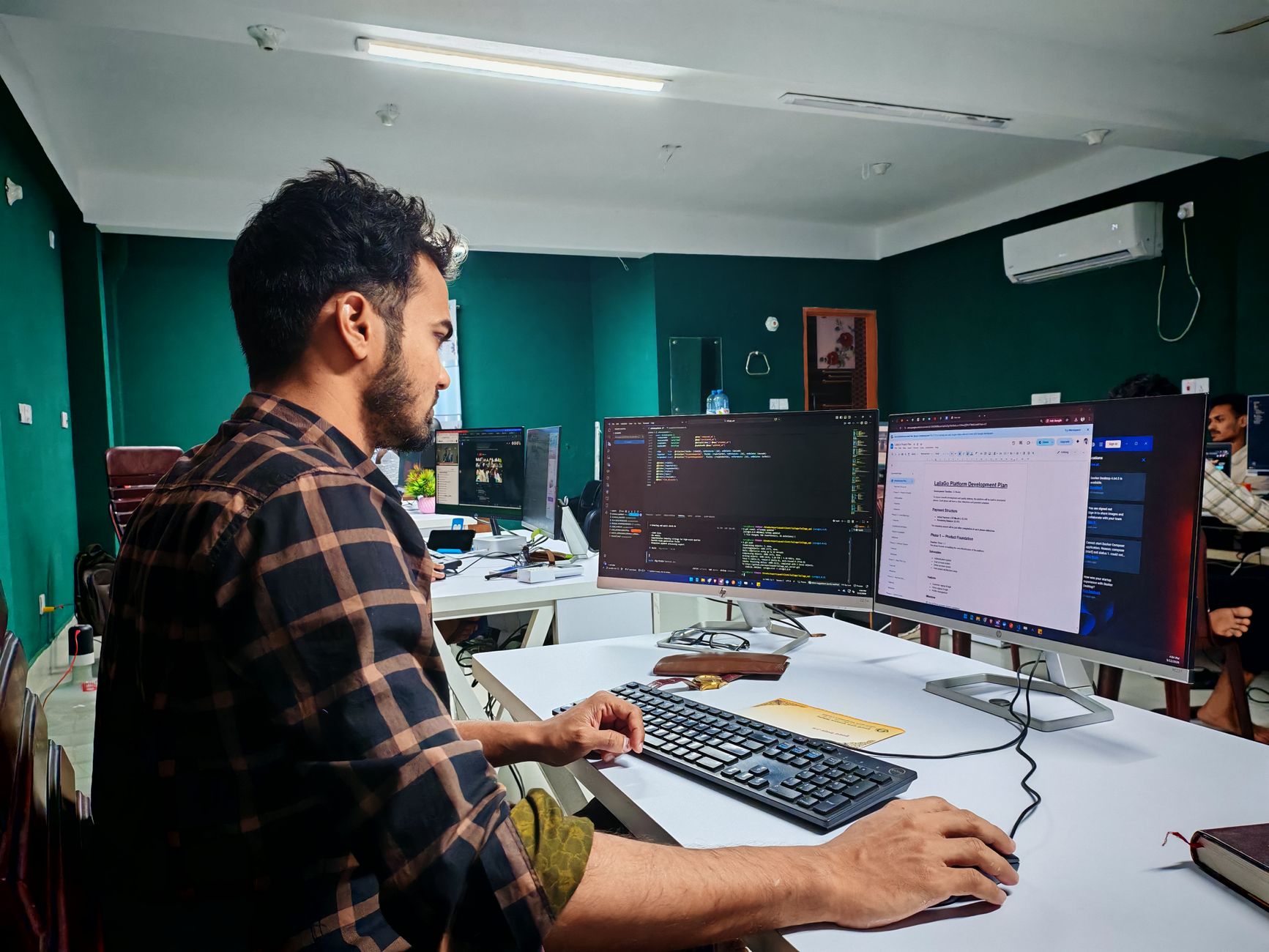
Developer rates in India in 2026
Developer rates in India in 2026 land between $15 and $80 per hour, $1,500 and $9,000 per month, or ₹3.5 to ₹50+ LPA for full-time roles, depending on city, experience band, and engagement type. The headline number most founders quote ("$25/hr from India") is roughly 40% out of date for senior talent in Bangalore and Hyderabad, and roughly 50% too high for junior talent in Tier-3 cities.
This post breaks the market down the way it actually clears: by city tier, by experience band, by engagement type, and against the global comparable. Every number has a source. The goal is to give you a rate card you can defend in a budget meeting, not a vibes-based range.
The headline rate card (2026)
Here is the unified view, normalized to USD/hour for comparison. Indian agencies, dedicated-team vendors, and freelance marketplaces price differently, so the same engineer costs you 2-3x more through one channel than another.
| Engagement type | Junior (0-3 yr) | Mid (3-6 yr) | Senior (6+ yr) | Lead/Architect |
|---|---|---|---|---|
| Freelance (Upwork, Toptal-India) | $10-$25/hr | $25-$45/hr | $45-$80/hr | $80-$120/hr |
| Dedicated developer (vendor) | $15-$22/hr | $22-$38/hr | $38-$58/hr | $58-$85/hr |
| Development agency (project) | $25-$40/hr | $40-$60/hr | $60-$95/hr | $95-$140/hr |
| Full-time hire (loaded cost) | $14-$20/hr | $20-$32/hr | $32-$50/hr | $50-$75/hr |
| Cadence weekly booking | $12.50/hr* | $25/hr* | $37.50/hr* | $50/hr* |
*Cadence rates are flat weekly: junior $500, mid $1,000, senior $1,500, lead $2,000. Hourly equivalents assume a 40-hour week.
A few things jump out. Agencies cost roughly 2x what a vendor-sourced dedicated developer costs because you are paying for project management, QA, sales overhead, and account management. Freelance senior rates have crept past in-house full-time loaded cost, which is a 2025-2026 inversion that did not exist three years ago. AI-fluent engineers ($28-$80/hr at the senior band, per Acquaint Software's 2026 rate study) carry a 25-40% premium over the same band without LLM tooling fluency.
City tier breakdown: where the rate actually comes from
India is not a single labor market. Bangalore and Hyderabad pay 20-35% above the national average; Chennai and Kolkata pay 10-20% below. The same JD lands at very different LPA depending on pin code.
Tier-1: Bangalore, Hyderabad, Mumbai, Delhi-NCR
Bangalore is still the price ceiling. Full-stack salary data from 2026 puts senior engineers at ₹30-55 LPA (~$36k-$66k base) in Bangalore, with FAANG and unicorn outliers crossing ₹70 LPA total comp. Hyderabad has closed the gap fast. Microsoft, Google, Amazon, and Apple have all expanded their Hyderabad campuses since 2024, pulling senior comp into the ₹28-48 LPA range.
| City | Fresher | Junior (1-3 yr) | Mid (3-6 yr) | Senior (6+ yr) |
|---|---|---|---|---|
| Bangalore | ₹5-8 LPA | ₹10-16 LPA | ₹18-32 LPA | ₹30-55 LPA |
| Hyderabad | ₹4.5-7 LPA | ₹9-15 LPA | ₹16-28 LPA | ₹28-48 LPA |
| Mumbai | ₹4.5-7 LPA | ₹9-14 LPA | ₹16-26 LPA | ₹26-45 LPA |
| Delhi-NCR | ₹4-6.5 LPA | ₹8-13 LPA | ₹14-24 LPA | ₹22-38 LPA |
Source: aggregated from Naukri JobSpeak Q1 2026, AmbitionBox role-level data, and GROWAI's 2026 city-wise compensation study.
Tier-2: Pune, Chennai, Ahmedabad
Pune has the deepest service-company bench (Infosys, TCS, Persistent), which keeps mid-band rates predictable. Chennai is rich in SaaS engineering talent (Zoho, Freshworks alumni). Ahmedabad has emerged as a Flutter and React Native hub.
| City | Junior | Mid | Senior |
|---|---|---|---|
| Pune | ₹8-13 LPA | ₹14-24 LPA | ₹24-40 LPA |
| Chennai | ₹7-12 LPA | ₹13-22 LPA | ₹20-35 LPA |
| Ahmedabad | ₹6-11 LPA | ₹12-20 LPA | ₹18-32 LPA |
Tier-2 is where most outsourced engineering still happens. The arbitrage versus Bangalore is roughly 15-25% at every band. The trade-off is a thinner senior bench for AI-native and infra roles.
Tier-3: Kochi, Indore, Jaipur, Bhubaneswar
Tier-3 cities have grown post-COVID as remote-first defaulted. Razorpay, Postman, and CRED all hire from Tier-3 now. Rates run another 15-20% below Tier-2.
- Junior: ₹4-9 LPA
- Mid: ₹10-18 LPA
- Senior: ₹15-28 LPA
Tier-3 hires used to come with a coordination tax (less English fluency at the senior end, weaker async habits). In 2026 that gap has mostly closed for engineers who came up through remote-first companies. Engineers who only ever worked at TCS Kochi remain a different bet.
Engagement type: the same engineer, four prices
This is the part most founders get wrong. The same Bangalore mid-level React engineer costs you very different amounts depending on how you book them.
1. Freelance marketplace (Upwork, Fiverr Pro, Toptal-India)
Cost: $25-$45/hr at the mid band. You pay for nothing except hours billed. You also get nothing except hours billed: no replacement guarantee, no QA, no PM, no security review. Median time to find a vetted freelancer on Upwork in 2026 is 9.4 days (Upwork H2 2025 transparency report). Two-thirds of first hires get replaced inside 60 days.
2. Dedicated developer (vendor / staff augmentation)
Cost: $22-$38/hr at the mid band, monthly $3,500-$5,500. You sign a 3-12 month contract with a vendor (Turing, BairesDev India, regional ODCs). The vendor handles HR, tax, and replacement. You manage the work. Margins for the vendor are typically 30-45% on top of what the engineer takes home.
3. Development agency (project pricing)
Cost: $40-$60/hr at the mid band, or fixed-bid project rates. Agencies wrap a PM, a designer, a QA, and a tech lead around the engineers. You pay for that wrapper whether or not you need it. Good for one-shot builds (a marketing site, a rebuild, a one-off mobile app). Bad for ongoing product work where you have your own PM.
4. Full-time hire (in-house)
Cost: ₹14-24 LPA fully loaded for a mid-level Bangalore hire (~$20-$32/hr at 2,080 hrs/year). Looks cheap until you add the recruiter fee (15-20% of first-year CTC), the 3-6 month ramp, and the 25-30% attrition rate at Indian product companies. The Razorpay 2024 transparency leak showed actual fully-loaded cost (recruiter + benefits + equipment + ramp) at roughly 1.5x base for the first 18 months.
5. On-demand booking (Cadence)
Cost: $1,000/week flat for a mid-level engineer ($25/hr equivalent), $1,500/week for a senior. Weekly billing, replace any week, no notice period. The trade-off is the engagement model: this is a weekly booking, not a permanent hire. Good for scope you can ship in 4-26 weeks. Wrong for a 5-year strategic capability where you want equity, growth path, and long tenure.
The honest comparison: for a 12-week build with a senior engineer, you are looking at $18,000 on Cadence vs $24,000-$36,000 through an agency vs ~$45,000 fully loaded if you spin up an in-house hire and shut them down at week 12. For a 5-year strategic engineer, the in-house hire wins on every dimension once tenure clears 18 months.
What the LPA numbers hide
Indian engineering comp has structural costs that don't show up in the AmbitionBox average. If you are budgeting from a US founder seat, factor these in.
- Recruiter fees: 15-20% of first-year CTC for retained search, 8.33% (one month) for contingency. A senior Bangalore hire at ₹35 LPA costs you another ₹3-7 lakh in recruiter spend.
- Notice period overhang: Standard Indian notice is 60-90 days. You pay for the engineer's productivity ramp on day 91, not day 1. Cadence engineers and dedicated-vendor engineers both bypass this.
- Equipment and tooling: ₹80,000-₹1,50,000 per engineer for a MacBook Pro, monitor, license stack, plus $200-$500/month per seat for Cursor, Linear, GitHub, Sentry, Vercel.
- Attrition: Indian product companies report 22-28% annual voluntary attrition in 2026 (Naukri JobSpeak). One in four hires churns inside year one.
- Ramp time: Median time-to-first-meaningful-PR for a fresh hire at a mid-stage Indian startup is 47 days, per the 2025 Razorpay engineering blog. For comparison, the median time-to-first-commit on Cadence's 12,800-engineer pool is 27 hours because the engineer is already onboarded to the platform's AI-native workflow.
The all-in number for a Bangalore senior in year one, including recruiter and ramp, is roughly ₹52-65 LPA effective cost against a stated CTC of ₹35-40 LPA. The benchmarking sites do not surface this.
The 2026 shift: why these numbers are different from 2023
Three things changed the rate card between 2023 and 2026.
AI-native fluency split the senior band. Engineers who use Cursor, Claude Code, and Copilot daily ship 2-4x faster on shippable scope (GitHub State of the Octoverse 2025, internal benchmarks at Razorpay and Postman). The rate spread inside the "senior" band widened from $40-$55/hr in 2023 to $35-$80/hr in 2026. The bottom of the band fell as commodity senior work got cheaper; the top rose as AI-fluent seniors became the multiplier.
Tier-3 caught up. Pre-COVID, hiring from Indore or Bhubaneswar carried a 30-40% discount with a real coordination tax. Post-COVID, remote-first defaults and async tooling closed most of the gap. The discount is now 15-20%, and the coordination tax is near zero for engineers who came up through Razorpay-style companies.
Booking emerged as a category. Weekly engineering booking (Cadence and a handful of others) created a fifth engagement type that did not exist in 2023. Fully-loaded cost lands between freelance and in-house, with weekly cancel-ability that neither offers. The math flips toward booking for any project under 12 months.
If you want to pressure-test these numbers against your specific stack, run the numbers on the engineering ROI calculator before you commit to a 12-month vendor contract.
How to use this rate card
Five questions to answer before you spend.
- Is this scope a 12-week build or a 5-year strategic capability? Under 12 months, booking or freelance wins on math. Over 18 months, in-house wins after ramp recovers.
- What city tier are you actually paying for? A Tier-2 mid-level engineer at $25/hr can match Bangalore senior output if the spec is well-written. A Bangalore senior at $50/hr is wasted on cleanup work that a junior can do.
- Do you need a wrapper? Agencies bundle PM/QA/design at 2x the rate. If you have a PM and a designer in-house, you are paying twice for what you already have.
- What is your replacement plan? If a hire underperforms at month 4, what does it cost to swap? Full-time: 90 days notice plus recruiter spend. Vendor: 30-60 days. Cadence: same week, no notice.
- Are you over-paying for senior when mid handles the scope? Most founders default to "senior" because it sounds safer. For 60-70% of feature work, mid-level execution with a senior code review on Friday is the right shape. This is also visible in our breakdown of senior software engineer comp by region, which shows how senior premiums vary across markets.
If the answer to question 1 is "12 weeks," and the answer to question 4 is "I want to swap fast if it doesn't work," the fastest path in 2026 is a weekly booking. Book a vetted Cadence engineer and you start the 48-hour free trial inside 2 minutes; if the engineer is wrong, you cancel that week and try a different one. Every engineer on Cadence is AI-native by default, vetted on Cursor / Claude / Copilot fluency in a founder-led voice interview before they unlock bookings, so the AI-fluency premium is built into the base rate, not an upsell.
Sources and methodology
- Naukri JobSpeak Q1 2026 for city-wise demand and attrition.
- AmbitionBox role-level data (April 2026 snapshot) for LPA bands.
- Acquaint Software 2026 India rate study for hourly rates by stack and seniority.
- GROWAI 2026 full-stack city compensation guide for Tier-1 / Tier-2 splits.
- levels.fyi India for FAANG-India total comp outliers.
- Razorpay 2024 transparency leak for fully-loaded cost multipliers.
- GitHub State of the Octoverse 2025 for AI-native shipping velocity benchmarks.
- Cadence internal data (12,800-engineer pool, 27-hour median time-to-first-commit, 67% trial-to-active conversion).
Where ranges differed across sources, we took the AmbitionBox/Naukri midpoint as authoritative for full-time LPA, and the vendor-sourced rate study for hourly numbers. If you want the deeper market view that includes country-level alternatives, the best countries for hiring engineers in 2026 covers Poland, Argentina, and Vietnam alongside India.
Want the rate card applied to your actual scope? Run your project through the ROI calculator to compare full-time, agency, and weekly-booking math side by side, in under two minutes.
FAQ
What is the average hourly rate for a developer in India in 2026?
The market median for a mid-level developer is $25-$38/hr through a vendor or dedicated arrangement, $40-$60/hr through an agency, and $22-$45/hr on freelance marketplaces. Senior engineers run 50-100% above mid; juniors run 30-45% below.
How much does it cost to hire a senior software engineer in Bangalore?
Stated CTC ranges from ₹30-55 LPA in 2026, but fully-loaded year-one cost (recruiter + ramp + benefits + equipment) lands at roughly ₹52-65 LPA effective. Add a 22-28% probability of replacement inside 12 months, per Naukri 2026 attrition data.
Is it cheaper to hire freelance or through an agency in India?
Freelance is roughly 40-50% cheaper per hour, but you absorb all the project management, QA, and replacement risk. Agencies cost more because they bundle that wrapper. For projects under 100 hours, freelance usually wins. For multi-month builds with an in-house PM, dedicated developers or weekly booking deliver better all-in economics than either.
How do Cadence's weekly rates compare to Indian agency rates?
Cadence's mid-level rate is $1,000/week ($25/hr) and senior is $1,500/week ($37.50/hr), flat. A comparable Indian agency mid-level rate runs $40-$60/hr, and a senior runs $60-$95/hr. The trade-off is engagement style: Cadence is a weekly booking with no agency wrapper, replaceable any week. Agencies bundle PM and QA but lock you into longer contracts.
Why are Indian developer rates rising in 2026?
Three reasons: AI-fluent senior engineers ship 2-4x faster and command a 25-40% premium; FAANG and US product companies expanded India campuses 2024-2026 (especially Hyderabad), pulling salary anchors up; Tier-3 talent caught up to Tier-2 quality, which compressed the discount and raised the floor.
Data scientist at withRemote. Writes on data-informed product decisions, engineering productivity metrics, and benchmarks.