Pair programming remotely: tools and rituals that work
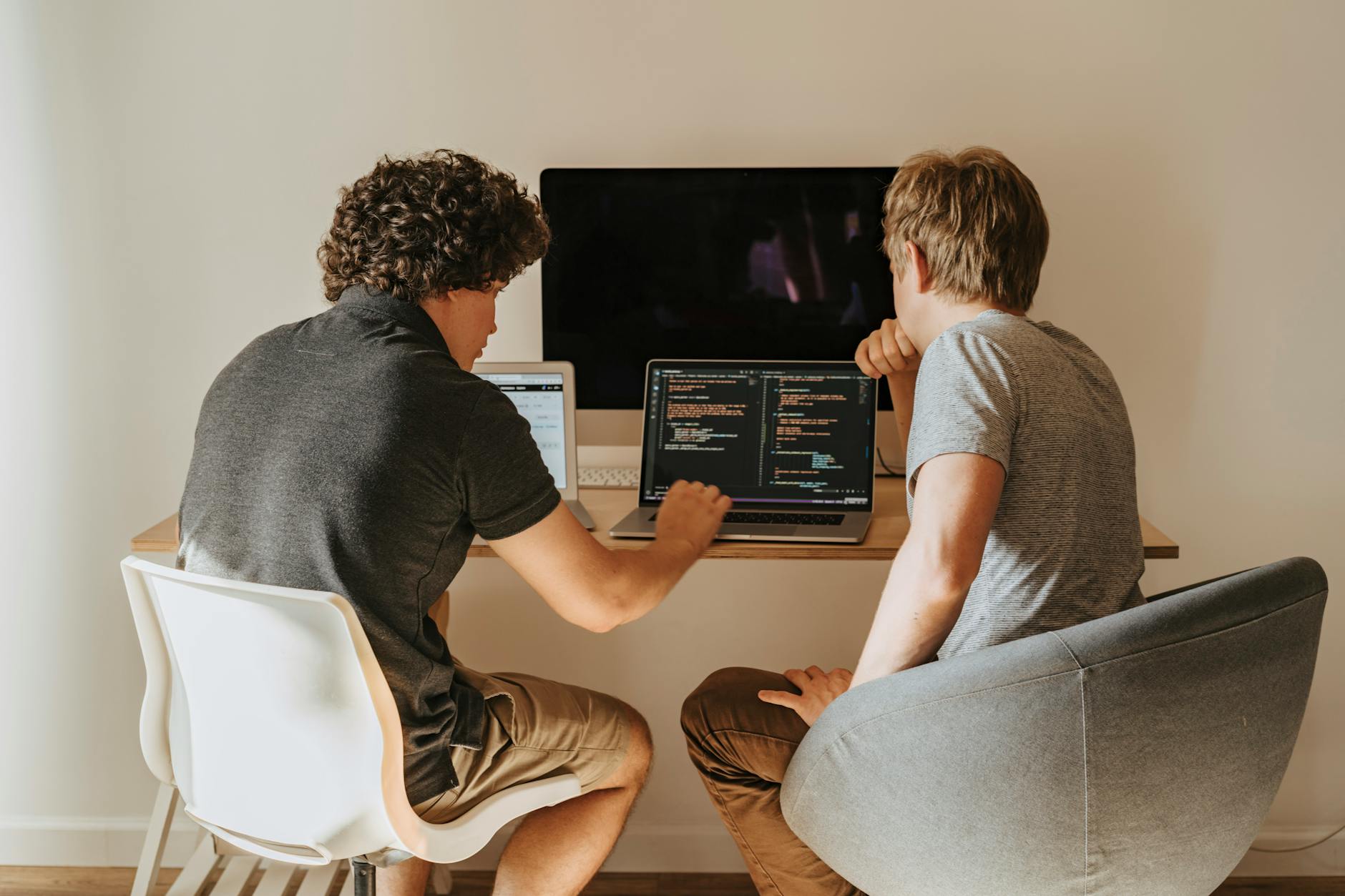
Pair programming remotely: tools and rituals that work
Remote pair programming in 2026 is two distinct activities. One is pairing with an AI (Cursor or Claude Code) for daily implementation. The other is pairing with a human for the few moments where one human brain isn't enough: onboarding, architecture, mentoring, incidents. The stack and rituals below cover both, honestly, with the data on what each is actually worth.
Remote pair programming in 2026: what actually happens
Most pair programming today is human plus AI, not human plus human. This is not a forecast. It is the current behavior of working engineering teams.
The signal is in the tooling market. JetBrains announced in March 2026 that Code With Me, its in-IDE pairing tool, will be unbundled from JetBrains IDEs in 2026.1 and the public relay will shut down in Q1 2027. Their reason, in their own words: demand for built-in pairing peaked during the pandemic and shifted afterward.
The replacement is not another human-pair tool. It is AI assistants embedded in every editor. The 2025 Stack Overflow Developer Survey found 84% of professional developers using AI tools, and 51% using them daily.
Human pair programming did not die. It got reserved for the moments where it actually wins, which is a smaller share of the workday than the 2018 literature assumed. The rest of this post is about how to use both tools well.
The tools that still ship in 2026
Here are the six tools we see distributed teams actually pay for or run, with honest trade-offs.
| Tool | Latency | Platform | Cost | Best for |
|---|---|---|---|---|
| Tuple | Very low | Mac only | $25/user/mo | Two-person Mac pairs, daily use |
| Pop | Low | macOS, Windows, Linux | $20/user/mo | Cross-platform teams, design + code |
| VS Code Live Share | Low | VS Code, GitHub Codespaces | Free | In-editor pairing, slow-link friendly |
| JetBrains Code With Me | Low | JetBrains IDEs | Free, sunsetting Q1 2027 | Existing JetBrains shops (export soon) |
| CodeTogether | Medium | VS Code + JetBrains + Eclipse | $8/user/mo | Cross-IDE pairs |
| tmux or Zellij + Zoom | Low | Any terminal | Free | Ops, SRE, terminal-heavy work |
A few notes the tool review sites skip.
Tuple is the gold standard for Mac-on-Mac pairing. The latency is genuinely lower than Zoom screen-share. The trade-off is single-platform: if your pair is on Linux, you can't.
Pop is the practical pick for mixed fleets. Multi-cursor support, fewer pixels of jank than Live Share when the connection is poor.
VS Code Live Share is free and good. It hands the guest a real cursor inside the host's editor, with terminal sharing and port forwarding. It's the right default for most teams that already live in VS Code.
Code With Me still works, but if you're standing up new infrastructure on it in 2026, you have 9 months of runway. Migrate.
CodeTogether is the answer when one engineer uses VS Code and the other lives in IntelliJ. Cross-IDE pairing is rare but unsolvable any other way.
tmux + Zoom screen share is the zero-install fallback. For SRE work and terminal-heavy debugging it is often the right answer. Zellij is the modern alternative if you'd rather not learn tmux's keybindings.
The rituals that still work
Tools matter less than rituals. Same six rituals show up on every effective remote team we've seen.
Driver and navigator with 25-minute switches. The driver types. The navigator thinks one step ahead, runs reference docs, catches typos. Switch every 25 minutes. Without the switch the navigator drifts to email, and the session becomes one person coding while another watches.
Ping-pong TDD. The navigator writes a failing test. The driver makes it pass, then writes the next failing test. Hand the keyboard back. This forces both engineers to think about the contract before the implementation, and it produces a test suite as a byproduct.
Daily 60-minute pair window. Schedule it. Calendar it. Treat it like a standup. Most teams that "pair sometimes" never actually pair, because nobody initiates. A 60-minute window forces it to happen.
Mob programming for cross-team knowledge transfer. Three or four engineers, one keyboard, rotate every 10 minutes. Slow for delivery, fast for spreading knowledge. Use it when a system is owned by one person and shouldn't be.
Pomodoro with real breaks. Twenty-five minutes on, 5 minutes off, hard stop after 4 cycles. Pairing is more exhausting than solo work because there's no idle space. Skipping breaks burns sessions out by hour three.
Async-record the session. A pair session with a Loom recording becomes a learning artifact for the rest of the team. Engineers who couldn't make the live window watch it the next morning. This compounds across a quarter.
The supporting research is older than the tooling. Williams (2000) measured a 15% time cost for paired work and a 15% reduction in bugs. Nosek (1998) found 40% faster completion on hard problems. Jensen (1996) measured a defect rate roughly one one-thousandth of solo work on the same task. The numbers are old; the mechanism still holds.
AI as the default pair partner
In 2026, the engineer's daily pair partner is an AI. This is not a stylistic choice. It is the productive default for almost all implementation work.
Two tools dominate.
Cursor is an AI-native fork of VS Code. You drive it the way you drive any editor, with the AI suggesting completions, refactors, and multi-file edits inline. Cursor wins when the work is visual, incremental, and feedback-heavy. You are pairing with the AI, not delegating to it.
Claude Code is a terminal-native agent. You give it a goal and it plans, edits, runs tests, and reports back. Claude Code wins when the work is large, repetitive, or autonomous (a migration, a test backfill, a refactor across 40 files).
The productivity numbers are real. GitHub measured Copilot users as 53.2% more likely to pass all unit tests on a controlled task. The Stack Overflow 2025 survey found 81% of Copilot users reporting productivity gains for coding and testing. Index.dev's 2026 statistics put completion-time savings at 55% on AI-assisted tasks, with an 8 to 12% lift on overall productive time once you account for coding being only 35 to 40% of the workday.
What AI cannot do, even in 2026: make architectural calls under uncertainty, mentor a junior on judgment, hold context across a quarter the way a teammate does. It is a brilliant pair partner with no taste. You bring the taste.
That is also why the writing-code-with-AI discipline matters. Engineers who treat the AI like a junior teammate (review every diff, reject confident-but-wrong suggestions, scope tasks tightly) ship faster than those who autocomplete blindly. Our internal note on writing code with AI is the longer version of this point.
When human pairing still wins
Five situations where two humans on one screen still beats one human plus AI.
Onboarding a new engineer. The first two weeks of a new hire's tenure are mostly transferring tribal knowledge: why this service is split this way, why we don't use that library anymore, where the dragons live. Pair them with the team lead for 50% of their first week. The investment pays back inside a month.
Hard architectural decisions. When you're choosing between two viable system designs, two engineers thinking out loud beats one engineer plus an AI. The AI will confidently recommend whichever option you ask about last. Two humans will surface trade-offs neither saw alone.
Knowledge transfer before someone leaves. Engineer giving notice. Three weeks. Pair them with whoever inherits their systems. Mob if there are two inheritors. Record everything.
Mentoring juniors on judgment. A junior engineer can ask Claude Code how to write a test. They cannot ask it whether this feature should exist. Senior + junior pair sessions are how juniors learn to make calls. They are how seniors learn to articulate calls they used to make on instinct.
Production incidents. Two pairs of eyes on a live incident, voice channel open, one driving and one cross-checking. Skip the AI here. The cost of a hallucinated suggestion at 3am is too high.
When pairing is wasted
Five situations where pairing burns calendar without producing value.
Parallel independent work. If the next two stories don't touch each other, split them. Pairing on parallel work is two engineers doing one engineer's job.
Simple bugs with clear stack traces. A null pointer in a function with three lines of business logic does not need two engineers. It needs one engineer plus Claude Code, and 4 minutes.
Status syncs disguised as pairing. A meeting where one engineer demonstrates progress to another is not pairing. It is a status sync with worse documentation. Send a Loom.
Two seniors on a junior task. Two $1,500 weeks pairing on dependency upgrades is malpractice. Give it to a junior. Or give it to Renovate.
All-day pairing. Pair quality drops sharply after four hours. After six it's negative. Schedule pair sessions in 60 to 90-minute blocks. Single-track them.
The honest version of "should we pair?" is: did we just describe an onboarding, an architecture call, knowledge transfer, mentoring, or an incident? Yes? Pair. No? Don't.
A weekly pairing cadence that actually ships
The shape we recommend, for a steady-state remote team of 5 to 12 engineers.
- 60 minutes daily of AI-paired implementation per engineer (Cursor or Claude Code, solo)
- 2 hours weekly of human pair time per engineer, scheduled and calendared
- First week of a new hire's tenure: 50% paired with team lead or assigned mentor
- Steady state: 10% paired, 90% solo with AI
- Quarterly mob session for the next architectural decision (data model, deploy pipeline, auth model)
That is roughly 5% of total engineering time on human pairing. It feels like very little. It is the right amount.
If your team has Slack-vs-Teams style communication frictions getting in the way of scheduling pair sessions, our Slack vs Teams for engineering teams breakdown is worth a read. Pair-friendly tooling matters less than a chat client that reliably delivers calendar pings.
If your engineers are pairing from a kitchen table on a 13-inch laptop, fix that first. The best home office setup for remote engineers is the pre-requisite for productive pair work; latency on a bad webcam destroys the session.
Where Cadence fits
Most of this post is tool and ritual advice. The other half of pairing is the engineer on the other end of the call.
Cadence is an on-demand engineering marketplace. Founders book vetted engineers by the week. Junior is $500/week, mid is $1,000, senior is $1,500, lead is $2,000. Every engineer on the platform is AI-native by default: vetted on Cursor, Claude Code, and Copilot fluency in a founder-led voice interview before they unlock bookings. There is no non-AI-native option.
What this means for pairing: when you book a senior on Cadence to onboard your team to a new system, they show up already fluent in the AI tooling your team uses. They don't need a week to ramp on Cursor. The 48-hour free trial is enough to run two pair sessions and see whether their explanation discipline matches your team. If it doesn't, replace them on Friday and try the next match. Weekly billing makes that a cheap experiment instead of a 90-day mistake.
Specifically: if you're hiring for a 6-week onboarding push (new architect joining, legacy system needing transfer, junior team needing mentorship), the booking-by-the-week model fits better than a full-time hire you'll need to keep busy after the project ends.
If you're trying to figure out whether your next pair-heavy project should be staffed in-house or booked, find your remote engineer in 2 minutes and run a 48-hour trial before you commit to anything else.
FAQ
Is pair programming worth it in 2026?
Yes, on specific work. Daily implementation pairing is now done with Cursor or Claude Code, not another human. Reserve human pairing for onboarding new engineers, hard architectural decisions, knowledge transfer, mentoring juniors, and production incidents. Roughly 5% of engineering time on human pairing is the right steady state.
What is the best remote pair programming tool?
For two Mac engineers, Tuple. For cross-platform teams, Pop. For free in-editor pairing, VS Code Live Share. For cross-IDE pairs, CodeTogether. For terminal-heavy work, tmux or Zellij plus a Zoom screen share. JetBrains Code With Me still works but the public relay shuts down in Q1 2027, so don't build new habits on it.
How long should a pair programming session last?
Sixty minutes is the sweet spot. Switch driver every 25 minutes inside that hour. Take a 5-minute break between sessions. Pair quality drops sharply after four hours and goes negative after six. Schedule pair time in single 60 to 90-minute blocks rather than splitting it across the day.
Does AI replace human pair programming?
For routine implementation, yes. AI pair programming with Cursor or Claude Code is faster, available 24/7, and consistent. Studies show 53.2% higher rates of passing all unit tests with Copilot. For architectural decisions, mentoring juniors on judgment, and knowledge transfer between teammates, AI does not replace human pairing. The 2026 stack uses both, on different problems.
How do you pair with engineers in different time zones?
Schedule a fixed 60-minute overlap window per pair per day, calendared, recurring. Use that window for the live pair session. Async-record with Loom or QuickTime so a third teammate who couldn't make it live can watch it the next morning. Don't try to pair across more than 5 hours of time difference; the overlap window gets too small to schedule reliably.
15+ years across startups, healthcare, marketing, sales, and IT. NIT Bhopal, Arizona State University. Built and exited companies. Writes on operations and founder-led growth.